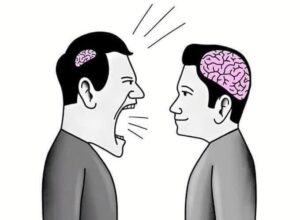
All the Breaking Points We’re At, or, Outgrowing Collapse and Self-Destruction

Hi! How’s everyone? Today we’re going to talk about a theme we’ve been discussing a little bit in sessions. Critical points of transformation in our lives. Financially, emotionally, relationally, professionally, even structurally, as in, exiting a collapsing America.
Breaking points.

Where are we in the world? Where are we in our lives? Where are we as people?

When I look around, I see breaking point. After breaking point. Not just at a macro level, institutionally, civilizationally, economically, but also at a micro one, individually, financially, relationally, personally.

And to me all this matters. So we’re going to talk about it, and then discuss what to do about it. Because the last thing you should do is pretend like you’re not reaching breaking point, too, when we’re surrounded by so many breaking points.

Just breathe with me for a second. Give yourself just one moment of grace. And one moment of searing truth. There’s no one here but us. Where are you with breaking point lately? Don’t lie to yourself. The point is to help you grow. And I won’t bore you with statistics, but they say that many, many of us are pretty close to breaking point.

I asked my friends over the last few months. We’re getting older. We needed to talk in a different way. How are they really doing? And as they opened up to me, dropping the pretenses of success, perfection, and vanity, a theme began to emerge.

Everyone was under immense pressure. The kind that breaches a hull. Think of Oceangate’s submarine, imploding in the depths. Marriages were at breaking point. Because finances were at breaking point. Because careers were at breaking point. Because people were at breaking point. Lives were. I could go on, and of course, the causality may differ.

Think about all the breaking points around us.

America’s at breaking point. The descent into authoritarianism is happening at lightning speed. Institutions are literally crumbling before our eyes. Stable, upward progress? Over. Gestapos on the streets. An economy sliding into chaos. Society’s ripping itself apart. Even MAGA voters are bewildered at the sheer intensity of the ruin.

The markets are at breaking point, pretending that “everything’s fine,” which is a surefire precursor to a crash, because of course, nothing’s remotely the same macroeconomically as it was just a few months ago. And so many of you are staring at your finances and wondering: where’s breaking point? It’s a good question.

The world’s at breaking point, too. Europe and Canada are literally breaking off from America before our eyes. Meanwhile, conflicts rage, Trump starts wars, and global peace and order break down. Macroeconomically, the world faces an infinite horizon of “low growth,” read, stagflation, or just stagnation if you’re lucky (and no, AI isn’t going to help, it’s going to dehumanize us all that much further.)

Shall I go on? But you already know. So let’s go up a level.

Just understand that there’s a relationship between a world at breaking point, and people at breaking point. So if you feel under this immense pressure, it’s OKBreathe. I don’t mean that just in the way your therapist does. I mean that in a deeper way, an existential one. Hitting breaking point is part of the human journey. It is a crucial step towards true maturity, the fullness of adulthood. It isn’t until we reach breaking point that we discover what courage, strength, empathy, and forgiveness, among many other genuinely adult qualities, truly are. And as we break away, often, we set ourselves free, too.

Understand: I don’t just mean breaking point emotionally, but in a wholer way. Marriages. Careers. Relationships. Money. Families. Just even…being able to go a few days without wanting to tear your hair out. All of it. Again, how many people are thinking about leaving America? That’s a breaking point, too.

Understand the message, too. It’s incredibly traumatic just to exist right now. In the mess that the world is in. Amidst the horrors and indignities and endless stupidities of it all. We’re dehumanized, alienated. We’re torn apart. But who is to put us back together?

Breaking points. Remember the “tipping” point? Then there are turning points. But I want to teach you to think well, and the better concept to use for times like these is breaking points. Tipping points and turning points are innocuous. They suggest a moral valence of zero. But breaking points?

They’re different. Think again of the Oceangate submarine. What happened? Stockton Rush, the CEO, was supremely confident, that he’d cracked it. Discovered the way to plunge to the depths safely. Carbon fiber hull. Ignored all the warning signs. One after the next.

And then? Bang. Implosion.

That’s a breaking point. The hull implodes. It’s not a turning point or a tipping point. The damned thing was crushed under the pressure.

That brings me to you and me and the world.

Let’s begin with the world, so you understand what to do about you. And those you love.

You can see the multiplicity of breaking points girding the world in immense pressure. And the truth is that the hulls of our institutions are being crushed. Bang. There goes another one. The more that you see the Stockton Rush effect? No breaking point here. The more confidence you should have that an institution or system is going to reach one. Markets, political parties, economies.

So what do we do about it? I think there are some pretty simple principles to employ. And here we get into Havens Thinking.

The correct thing to do now is to exit systems and institutions and maybe even relationships which now risk reaching severe breaking points. Unless you are very, very confident that you can bear the costs of those risks. Especially those where there’s a kind of denial about reaching breaking point.

By the way, this is what makes so many people so uncomfortable about America today. Not just the obvious collapse into chaos, but the sort of muted engagement with it, the limited understanding of the severity of it. I’m not saying “leave America,” but I am saying: this is the time to develop a Plan B. See the causal relationship between breaking point and denial.

That’s true in your financial life, too. We can all see that markets in America are going to reach breaking point. We just don’t know the precise day. Unless you think you do, why bear that risk? At this point, it’s almost surreal how much bad news arrives, and yet, markets sort of shrug. That’s denial. That there is a breaking point. All of which makes it only more inevitable that one is approaching fast. It’s never a good idea to invest much of yourself in systems which are approaching that state. When bad news is considered a good thing, the greater fool is you if you buy in. Because breaking point is surely on the way.

That brings me to you, as a human being. You must not lie to yourself about the immense pressure you’re under. A world at breaking point is pushing us to breaking point, too. All of us. Don’t doubt that, like some kind of dorky junior-league pundit. Nobody is tough enough, and everyone is hurting. We just don’t talk about it enough.

My advice is: open up about it. Ask those you love. If they’re at breaking point. You might be surprised. Confess to those you love. About where you are, too. Reach out to your friends. Rebuild all those relationships in a more authentic, genuine, and loving way.

Let’s talk about relational breaking points. This time in the world will test many, many relationships. Push them to and past breaking point. I see it all around me. I can’t tell you the number of people I know whose relationships are struggling profoundly, because of the shocks that have battered us all since Covid arrived.

I think that if your relationships are reaching breaking point, then it’s best to begin talking about it. And I know that’s not easy. But the alternative, which is to go on in the pretense, is becoming harder and harder to swallow by the day. Not just in an individual way, but at a systemic level, in the ongoing breakdown of social ties.

The answer to the problem of breaking points, then, isn’t the kind of glib denial we see at work in finance, politics, economics, self-help, and much more. The answer comes from a place of existential truth, as deep as the ocean. Seeking redemption in our fragility itself. Reaching towards an understanding of all this agony. In the bittersweet curse of the human condition. We are all frail, mortal, finite things.

We are all capable of breaking. And so is everything that we create. Markets. Marriages. Careers. Democracies. Constitutions. Economies. Lives. The lie we’re living, that everything’s OK, is killing us. It’s killing us socially, politically, economically, and it’s killing many of us inside, right down in the soul. And it’s going to test us, too. Our authenticity, courage, and truth. But this is the crucible of existential agency.

Nothing is forever, and nothing is strong enough not to break. This is the lie the fascists tell above all, that being superhuman will allow us this. It’s false. But the pretense must stop with you. How do you really defeat the bad guys? Like this. You have to excise the poison deep in the soul, not just bitch from the mouth. You have to tell the truth. About the terrible pain that we’re all in.

None of this happens if we’re not in pain. None of it. People turning to AI in despair for a relationship. People desperately gobbling up stocks on the cheap just to be able to retire. The turn to demagoguery. The regress into horror. The victories of hate and stupidity over reason and grace.

In this life, in this human experience, all we have is our infinite frailty, and from that comes true strength, courage, dignity. But to evoke those, to grow into them, we must begin with the power of authenticity. Here I am, at breaking point. Do you see me here, my arms wilting? Are you here with me, too? Isn’t this the time we live in, so full of fractures and fissures and jagged edges? And aren’t they cutting us all open?

That is why we hold each other close, night after night.

Understand yourselves in this way now. Reclaim your existential agency. The false bravado that we can ever have, create, touch, be, things that don’t break is only the road to the inferno. For us who live in the human world, freedom to exist as we truly are begins with this gift of the secret of one’s innermost pain. In which there is the capacity, need, surrender to, revelation of, love.

And in all that, we grow up. This is called maturity. Our world might not get there in our lifetimes. Our civilization may remain stuck here in narcissistic adolescence for ages to come. But we, ourselves, can strive towards adulthood in all these ways. This is called Being the Adult in the Room. The choice is yours.

As always, if you need help, just reach out,

Lots of love,

Umair (and Snowy!)

About the author:

Umair Haque is one of the world’s leading thinkers. A member of the Thinkers50, the authoritative ranking of the globe’s top management experts, he has published two books through Harvard Business Publishing, where he also authored Harvard Business Review’s top blog for several years, on subjects including economics, leadership, innovation, finance, and careers. Umair has held senior positions in finance and strategy, and holds degrees from McGill University and London Business School. He has authored The New Capitalist Manifesto: Building a Disruptively Better Business (2011) and Betterness: Economics for Humans through Harvard Business Review.

A popular media figure, he has over two hundred thousand followers on Twitter, appears on every major global news network, has been published or cited in nearly every major newspaper in the world, publishes at Medium, HBR, and Twitter, and speaks regularly to audiences public and private across the world.

Source:  https://medium.com/@umairh/all-the-breaking-points-were-at-or-outgrowing-collapse-and-self-destruction-cb60351215c2

How the Internet Warps Human Morality

Summary: A new study explores the impact of the internet on human morality, highlighting how evolved responses like compassion and the urge to punish are distorted online. The internet’s constant stream of extreme stimuli leads to compassion fatigue, public shaming, and virtue signaling.

These phenomena occur as empathy becomes overtaxed and punishment is easily dispensed in a cost-free, virtual environment. The authors advocate for research into better platform design and increased transparency of algorithms.

Key Facts:

  1. The internet causes compassion fatigue by overloading empathy with constant news.
  2. Public shaming is rampant online due to easy, cost-free punishment mechanisms.
  3. The authors call for research on platform design to mitigate negative impacts.

Source: NYU

In a Review article, Claire Robertson and colleagues explore how human morality, which evolved in the context of small in-person groups, functions on the internet with over five billion users.

Evolved human responses, such as compassion for victims and urges to punish transgressors, operate differently online, the authors argue.

The internet exposes users to large quantities of extreme morally relevant stimuli in the form of 24-hour news and intentionally outrageous content from sometimes physically distant locations.

Subjecting human brains to this new morally oversaturated environment has caused compassion fatigue, public shaming, ineffective collective action and virtue signaling, according to the authors.

Compassion fatigue arises because empathy is a costly cognitive resource, easily overtaxed by the demands of round-the-clock information about suffering.

Public shaming arises because the internet makes it all too easy for very large numbers of people to indulge in the universal human desire to punish wrongdoers, thought to be an evolved adaptation to living in groups—but small groups.

As posting a condemnation is nearly costless, it becomes a tempting way to signal moral virtue and group membership.

Real aid may in some cases be replaced by non-costly forms of compassion, such as “liking” or “sharing” a post, which does little to help but makes people feel they have fulfilled their moral responsibilities.

In addition, the ease of organizing online leads to massive—but ephemeral—social movements with shallow roots and little staying power.

The authors call for research into platform design features that sustain attention or engagement without inducing negative externalities on individuals and society, and for greater public access to platform algorithms so that research can proceed.

About this psychology and morality research news

Author: Claire Robertson
Source: NYU
Contact: Claire Robertson – NY

Original Research: Open access.
Morality in the anthropocene: The perversion of compassion and punishment in the online world” by Claire Robertson et al. PNAS Nexus


Abstract

Morality in the anthropocene: The perversion of compassion and punishment in the online world

Although much of human morality evolved in an environment of small group living, almost 6 billion people use the internet in the modern era.

We argue that the technological transformation has created an entirely new ecosystem that is often mismatched with our evolved adaptations for social living.

We discuss how evolved responses to moral transgressions, such as compassion for victims of transgressions and punishment of transgressors, are disrupted by two main features of the online context.

First, the scale of the internet exposes us to an unnaturally large quantity of extreme moral content, causing compassion fatigue and increasing public shaming.

Second, the physical and psychological distance between moral actors online can lead to ineffective collective action and virtue signaling.

We discuss practical implications of these mismatches and suggest directions for future research on morality in the internet era.

When other people tell nice stories about you…

(It is wonderful to read a story about yourself written by others as they see you living that story…)

Don’t change nature… Allow nature to change you! (Published at: Jana magazine-No:37 12 September 2023)

At Druids on Pohorje

“The spiritual master learns by himself all the time!”

Written by Vasja Jager

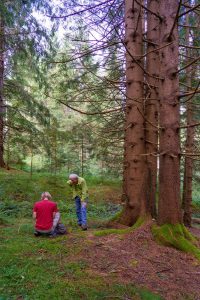
It is one of those golden early autumn days when the trees with a grateful murmur receive the sun’s rays, which will fill their leaves with purple in the coming weeks. Three of us walk through the fresh forest, we step over the soft moss, and it soon becomes clear that Zlatko Križan perceives his surroundings differently than most people. At the stream, which we cross, he shows us flint, “which has healing properties and which almost all Pohorje consists of”, at a group of young oak stems he tells us that they were planted by squirrels that brought acorns into this part of the forest and he remembers that a patch of meadow used to be full of delicious blackberries, and he is happy as a child to see the heather that still grows on the lawn. No feature of the landscape escapes him, and he knows how and why each landscape ended up at its place — he reads them like the features on the face of his oldest and most beloved friend: nature. After about twenty minutes of walking, he brings Šimen and me to our destination: a secret sacred circle in the middle of the unspoiled Pohorje woods, where rituals according to ancient Celtic customs take place on certain occasions.

We stop in the middle of a barely perceptible slope between a rare spruce forest. “Can you see the circle?” asks Križan. And he shows us with his hand — around us, the hollows, riverbeds, trunks, plants and roots actually close into a kind of boundary that forms a closed space that we would never have noticed without the help of our host. In the middle, there are some large spruces, at the base of which lies some flint that stings in the eyes. The space is bright and somehow friendly, and if a person wandered around these parts, he or she might stop and rest here for a few moments, although of course he or she would have no idea that he or she was regenerating himself/herself in the middle of an energy vortex with a measured force of over 40,000 Bovis units (“ten thousand or down, depending on the day”) — which for radiesthesists is about the same as jumping into the geyser of the life force. Here, our guide and friends perform most of their rituals, but they are significantly different, somehow calmer and more grounded than most of the popular new-age extravaganzas today. “There is no need to make noise and get high with different substances,” says Križan.

Modern Slovenian Druids know many different rituals, which all have similar dramaturgy, according to Križan, carefully reconstructed from historical and archaeological sources, as well as based on contacts with like-minded people from countries with a rich and vibrant Celtic tradition — Wales, Ireland, France… “First we purify the space with sage, then we make sacrifices with bread, drink and juniper, in the meantime, we perform a specific ritual and have a snack ourselves, then we play the drums a little and sing, then we purify the space again and close it,” he explains. Of particular importance is the covenant ritual, which is a kind of ancient forerunner to today’s wedding; it takes place in the holiest part of the year, on the morning of the Midsummer night, when couples gather to pledge loyalty. At the beginning of the forest, in the first of the two sacred circles where the rituals take place, Zlatko shows us a thick spruce, tightly wrapped in ribbons — a sign that this tree is a witness and guardian of the pledge of loyalty of four couples, including Zlatko Križan and his wife Majda.

Old soul, modern mind

After returning from the forest, a kind and caring woman serves us an excellent mushroom soup with buckwheat porridge, at which Šimen and I are ready to sing a gloria with musical spoons to all forest fairies and gnomes. Gratitude is even more in place because our benefactor moves around the house with noticeable effort — since childhood she has had paralysis, which developed after vaccination against the polio virus, and in adulthood she got a hernia, which damaged her nerves in the spine to such an extent that neurologists at the Maribor Clinical Centre only helplessly recommended her to a higher force. After the surgery, she lay in bed for three weeks and the question was whether she would still be standing on her feet. She managed to stand on her feet again with extreme persistence — she exercised for hours while attending all possible therapies, bio- resonance, Bowen therapy, she meditated… Then it stopped. “I told myself, I can’t work so hard all my life without a real breakthrough. That was the first time Zlatko heard about Woojer and he said to me — maybe that would be something for you.”

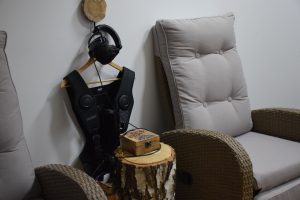
Woojer is a special vest that at first glance has nothing to do with medicine — it was developed by the gaming industry to allow players to experience the effects of virtual reality on their own skin; the vest simulates blows and touches by vibrating throughout the body, and Križan came up with the idea of how to use it for healing — heir to Iron Age pagan priest is also a first-class computer programmer. And so, he programmed the vest to massage the entire body in a precise rhythm that coincides with the healing frequencies that get deep into the patient’s body by large headphones. Thus, the brain is flooded with beneficial beta, gamma or delta waves, and the damaged organs tune to the appropriate frequencies through Woojer, for example to the Schumann resonance field, which, according to some interpretations, represents the heartbeat of the entire planet. At her husband’s urging, Majda Cerjak Križan gave his invention a chance — and soon she felt energy returning to her weakened legs. “One day, it was near the end of spring, I was washing dandelion by the trough when it suddenly crossed my mind — I’m standing! I am standing on my own two feet, but until then I always had to lean on the kitchen counter!”

Photo by: Šimen Zupančič

He became aware of life on the mound

Her 67-year-old husband also carries his cross. Zlatko Križan burnt out years ago (“It was my perfectionism!”), and the problems culminated in a heart attack. “Then I stopped, pondered on myself and put myself back together,” he says. He began to walk in nature — and tread the path that led him to the Celts and their wisdom. He ventured to the slopes of Pohorje, a special call led him to Poštela, where the remains of an ancient fort sleep under the black soil and moss; there he felt the best, there he began to recover, he became aware of life in himself and himself in nature. When he learnt that the place was closely connected with the Celts, an unusual curiosity was stirred in him. He began to educate himself about these people, about their customs, culture, and beliefs, and the more he knew, the closer he felt to them; in the following years, he met even more people who felt similarly-many of them are still part of his tribe today. “I say for myself that I am a Celt and that I have these genes in me,” he says. His belief is not without basis — readers of Jana may recall a recent text on the origin of Slovenes, in which we wrote about the results of genetic analyses, which showed that about 20 percent of the inhabitants of our region carry Celtic blood.

The true druid is not determined by blood, but by actions. “You don’t become a shaman by simply proclaiming yourself a shaman, as so many people do now! You develop into a shaman gradually, you seek answers, you test their truth, and you are subjected to the ordeals which make you stronger and from which you grow,” Križan warns. True spirituality is not an escape from pain into the higher spheres, but a courageous confrontation with all dimensions of existence; true spirituality is not the consolidation of one’s ego through the violent “awakening”/humiliation of the supposedly spiritually less developed people — true spirituality is humility, it is service, it is love.

“Everyone worships in their own way”

“The spiritual teacher teaches himself all the time and is not ashamed to admit it,” Križan believes. One of his greatest teachers is his 87-year-old mother who suffers from Alzheimer’s disease; when he talks about her, he does not resort to interpretations of his acquaintance with multidimensional beings from the Pleiades but speaks openly; when he speaks of her passing, he speaks of his distress — as a suffering son and as a man who acknowledges his smallness. “I don’t know,” he replies when I ask him what his higher logic for his mother’s disease is, and his blue eyes reflect the helplessness that makes him most dear to me at that moment.

Zlatko and Majda do not advertise their spirituality with flashy posts on the Internet, and they do not advertise their beliefs with aggressive posts on Facebook — whoever wants to find them finds them, and whoever wants to listen to them asks them. They do not have an (expensive) price list for their services, although they know many things, from reiki to radiesthesia — they only want to do good and live their modest but dignified life. They don’t think highly of themselves, and they judge people primarily by their actions — many other self-declared Slovenian messiahs would throw a curious scribe over the doorstep just because of my vaccination status, but they accept me as a welcome guest and feed me with a homemade mushroom soup. They do not run away from progress but try to use it for the common good — Zlatko’s invention with Woojer and healing frequencies helps elderly people with dementia and Alzheimer’s disease, burnt out and stressed individuals or companies who want to provide their employees with a little quality time out during breaks. And unlike most modern people, our Celts from Pohorje and their tribe accept nature in all its dimensions — as it should be, intact and dominant. “Don’t change nature, otherwise nature will change you,” Zlatko simply sums up; recent floods demonstrated the reality of his motto. And finally, they don’t impose their way of life on anyone. “It’s simple — you live, you don’t bother people,” Majda smiles. “Everyone worships in their own way.”

A THOUGHT: “You don’t become a shaman by simply proclaiming yourself a shaman, as so many people do now! You develop into a shaman gradually, you seek answers, you test their truth, and you are subjected to the ordeals which make you stronger and from which you grow.”

Copyright is owned exclusively by Vasja Jager

Photo by: Šimen Zupančič
Published in Jana Magazine-no:37 12.September 2023)
Translation: DVOJKA d.o.o. — Jerneja Jurca

Originally posted on Medium.com

The mystery of microbes that live inside tumours

(Image credit: Getty Images)
Bacteria and fungi can be found lurking in and around tumours. These microbial residents may be crucial to understanding how cancer develops and how to treat it.

Our bodies are thriving habitats for other life-forms. Our guts, mouths, noses and skin support diverse communities of microbes that can be both good and bad for our health. But in recent years scientists have been finding microbes in an altogether more surprising place – in tumours.

It is common to think of cancers as simply masses of a patient’s own cells that malfunction and grow uncontrollably. They are in fact communities of many different cell types, which is part of the reason why cancers are so hard to treat – it is difficult to target them without harming healthy tissue too.

But tumours also play host to a collection of cells from other life-forms entirely – bacteria and fungi. Some thrive in the environment around a tumour while others live inside the cancer cells themselves.

Until recently, however, the role that these microbes play in tumours has not been clearly understood. Now scientists are starting to unravel whether these tumour-associated microorganisms are accomplices that assist cancer cells as they develop or just unfortunate bystanders caught up in the tumour. And the answers could provide new approaches to treating and preventing cancers.

Fusobacterium nucleatum is commonly associated with the mouth, but is also found in many tumours (Credit: Alamy)

Fusobacterium nucleatum is commonly associated with the mouth, but is also found in many tumours (Credit: Alamy)

In a 2017 study Ravid Straussman, a cancer biologist at the Weizmann Institute of Science in Rehovot, Israel and his team showed that some bacteria living inside human pancreatic cancers can protect the tumours by inactivating a common chemotherapy drug. They found that one particular class of bacteria, known as Gammaproteobacteria, could break down gemcitabine: a drug used to treat a number of cancers including those found in the bladder, breast and pancreas. This helped the tumours become resistant to the drug. When the team injected mice with colon cancer with the bacteria, the mice’s cancers also became resistant to the drug. But when the researchers gave the mice an antibiotic alongside the chemotherapy drug, the resistance disappeared.

Further to these findings, research published in 2019 by a team at Tohoku University in Japan looked retrospectively at patients suffering from advanced cancers who were treated with either a chemotherapeutic drug alone and those who also received an antibiotic in addition to the chemotherapy in an attempt to prevent or treat an existing infection. They found that patients who were given an antibiotic had a better response to treatment. Although the study did not examine the amount of bacteria present in the cancer tissue of these patients, the researchers speculated that the antibiotics might have eliminated tumour-associated bacteria, which may have been interfering with the cancer treatment.

The studies offer a tantalising hint of what might be going on within tumours.

Straussman and his team are now hoping to build on these studies with a clinical trial involving patients with pancreatic cancer who failed their first line treatment.  They will give patients an antibiotic known to act against Gammaproteobacteria, alongside a course of the chemotherapy drug gemcitabine, to see if the antibiotic improves their outcomes.

But bacteria might also play other roles in cancer beyond protecting tumours from drug treatment.

In 2020, Straussman’s team looked at more than 1,500 human tumours across seven different cancer types: breast, lung, ovary, pancreas, melanoma, bone and brain. They found all of the tumour types were invaded by bacteria, which lived inside the cancer cells and some of the immune cells. Different tumour types had distinct communities of bacteria.

Each of these bacteria have adapted to the unique tumour microenvironment in which they live, says Straussman. In lung cancer, we demonstrated how people who smoke have more bacteria which can degrade nicotine – which is a smoke-related metabolite. In bone cancers, we see bacteria which metabolise hydroxyproline, which is a metabolite enriched in bone tumours.”

In many cases it is still unclear whether the bacteria are helping the sufferer by keeping the cancer cells under control.

Bacteria found in some types of breast cancer, for example, can detoxify arsenatea type of carcinogen known to increase the risk of breast cancer. Others can produce a chemical called mycothiol, which helps to reduce levels of harmful reactive oxygen molecules that can damage DNA.

There is growing evidence, however, that in some cases, the tumour-dwelling bacteria may actually be making cancers worse.

Some bacteria in breast tumours might make it easier for cancer cells to spread to other parts of the body

“More and more papers are coming out showing how they may be part of the carcinogenesis,” says Straussman. The bacteria may also be altering the ability of the immune system to target and destroy cancer cells, he adds. “But we are really scratching the surface here.” Much more needs to be done, he says, to study the effects that bacteria inside tumours have on the course of cancers.

There are already some clues. For example, a 2022 study by scientists in China suggests some bacteria in breast tumours might make it easier for cancer cells to spread to other parts of the body. The researchers found bacteria living inside breast tumour cells that were circulating in the blood of mice. These circulating cancer cells are shed from the primary tumour and can travel to other parts of the body, where they can metastasise and grow. However, as the tumour cells rattle around in the bloodstream, they are exposed to stress that causes some of them to break apart.

The Chinese researchers found that the microbes inside these mobile tumour cells seem to protect them from some of the stress they experience. They appear to do this by helping to reorganise internal cellular support structures known as the cytoskeleton so the cells are more robust. When the scientists eliminated these bacteria from the mice tumours, the tumours appeared to lose their ability to metastasise, although the primary breast cancer continued growing.

“There is growing evidence that specific microbes in the gut, the skin, and other mucosal organs, as well as in tumours, can either promote tumour growth and progression, or alternatively antagonise it,” says Douglas Hanahan, an oncologist at the Swiss Institute for Experimental Cancer Research in Lausanne, Switzerland, and the author of Hallmarks of Cancer: New DimensionsHowever, the picture remains murky. “The landscape is very complicated, and while there are clues, there is no definitive clarity about who does what.”

Other studies looked at Fusobacterium nucleatuman oral bacterium associated with gum disease, but might also be associated with a number of different cancers. It seems these bacteria can migrate from the mouth to colorectal cancer cell through the bloodstream. Each bacterium carries specific particles on its surface that bind to the surface of cancer cells, allowing it to colonise them.

Once in place, the bacteria can accelerate the growth and spread of tumours, by hampering the immune system’s ability to kill cancer cells. A protein produced by Fusobacterium nucleatum binds to a molecular control mechanism on the surfaces of human natural killer cells and T cells, which are both key parts of the immune system’s defences against tumours. This binding inhibits the cells’ ability to destroy cancer cells. The bacteria also deploy a molecular arsenal that makes cancer cells more resistant to chemotherapy.

Furthermore, Fusobacterium nucleatum‘s DNA has been found in human breast cancer samples. This suggests it also affects tumours elsewhere in the body. In one study, when the bacteria were introduced to mice with breast cancer, it accelerated the progression and spread of the disease. Giving the mice antibiotics prevented this.

It may seem tempting to include antibiotics in cancer therapies, but it is not as simple as that. Many of the microbes in our bodies are benign or even beneficial, so a brute-force antibiotic treatment could cause more harm than good, says Hanahan.

Instead, researchers must try to unravel the full complexity of the tumour-associated microbiome. Entire communities of microbes can be found within tumours, and they support each other in unexpected ways.

Many of the bacteria associated with colorectal cancers can work together to make the patient's condition worse (Credit: Getty Images)

Many of the bacteria associated with colorectal cancers can work together to make the patient’s condition worse (Credit: Getty Images)

One such example revolves around the primary chemotherapeutic drug used to treat patients with colorectal cancer, 5-fluorouracil (5-FU). It seems to inhibit the growth of the troublesome Fusobacterium nucleatumHowever, certain strains of Escherichia coli – commonbacteria found in the gut – render the drug inactive.

Researchers led by Susan Bullman, a cancer microbiologist at the Fred Hutchinson Cancer Centre in Seattle, US, found that the inactive form of 5-FU no longer inhibited cancer in laboratory cell cultures. It also no longer prevented Fusobacterium nucleatum’s growth. This led Bullman and her colleagues to hypothesise that patients who do not respond to 5-FU treatment may carry bacteria that inactivate the drug. These bacteria may allow Fusobacterium nucleatum the chance to flourish, making the patients’ conditions worse.

You might also be interested in:

At least 33 different types of cancer have now been found to have colonies of bacteria associated with them, thanks to techniques developed at the University of California, San Diego, that look for their DNA. The researchers believe the techniques could also be used to develop new ways of diagnosing cancer, by looking for the DNA from distinct tumour-associated bacteria in a patient’s blood.

The team behind this study joined forces with Ravid Straussman for a 2022 study that revealed another type of microbe – fungi – living in cancer. They found fungi in 35 different types of cancer, many of which housed distinct combinations of species.

“We found that tumours which have more bacteria also have more fungi, and ones with less bacteria have less fungi,” says Straussman. “We can only hypothesise at this point that some tumours are more restrictive for the presence of microbes in them and some are more permissive.”

Just as with bacteria, some of these fungi appear to be manipulating the immune system in the tumour’s favour. The fungus Malassezia globosa has been found to speed up the development of one form of pancreatic cancer. The same fungi have also been found in breast cancer patients who tend to have shorter overall survival, according to work by Straussman and his University of California, San Diego colleagues. Other research has found that some fungi present in pancreatic cancers hijack parts of the immune system to promote tumour growth.

A 2022 study also showed that stomach cancers rich in Candida fungi show increased expression of tumour genes that promote inflammation and that colon tumours rich in Candida DNA are more likely to be metastatic. This “might be because increased numbers in Candida may be associated with loss of gut epithelial barrier [the cells lining the gut],” says Iliyan Iliev, a microbiologist at Cornell University, whose team conducted the research.

Despite the rapid pace of these findings, many questions still remain about the relationship between tumours and the microbes that live in them. Do the microbes play a role in the development of the tumour in the first place? Or are they simply opportunistic residents that have adapted to protect their cancerous home when they find one? And can this microbe community be harnessed to help us in our fight against cancers?

In years to come, targeting tumour microbes may become as important as going after the cancer cells themselves, leading to earlier diagnoses and even new treatments. But that work has only just begun.

Source: BBC.COM